Home / Restaurant build-out
01 Path A · Restaurant & franchise operators
One contract for the drawings, the permits, the build, the trades and the inspections — so nobody is standing in your empty dining room arguing about whose scope it was.
→ The short version
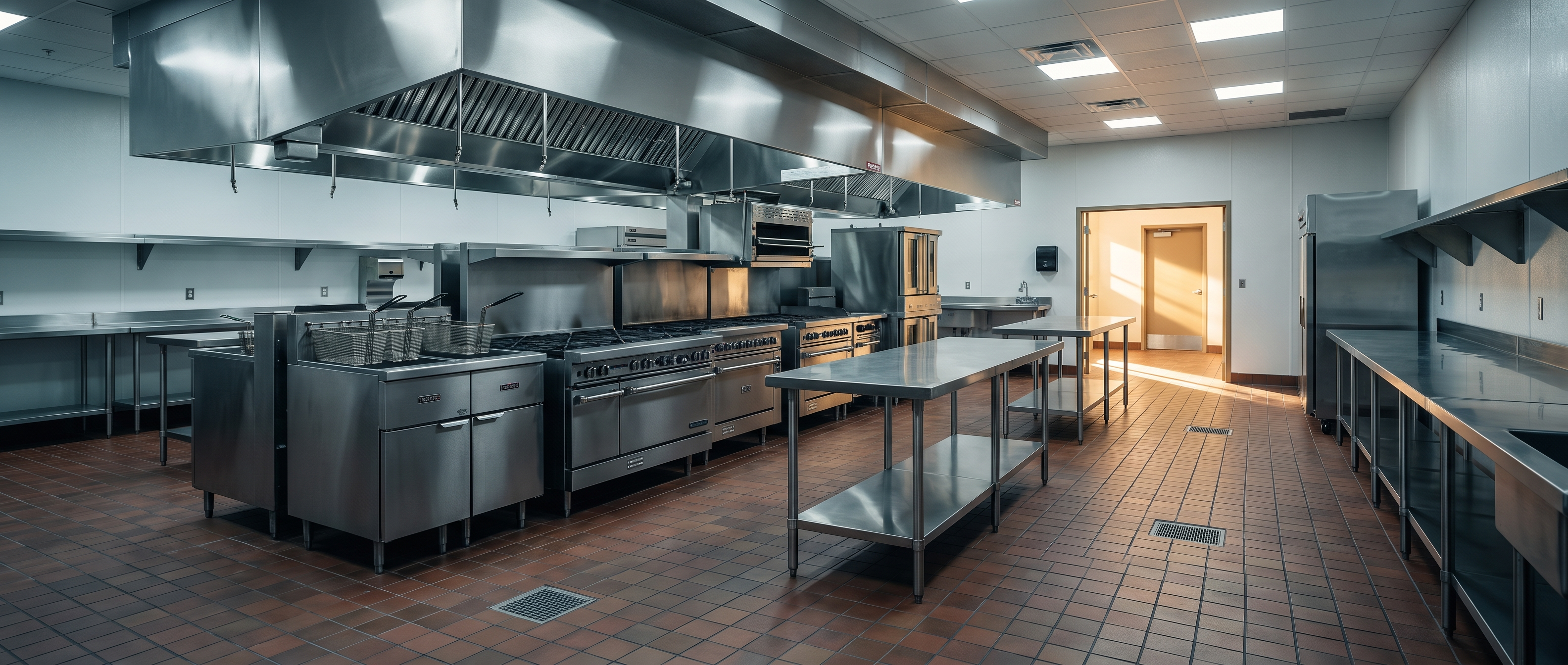
A restaurant build-out in Texas is rarely one approval. Building, health, fire and the utility or wastewater authority each review your project on their own calendar — and any project over $50,000 in construction cost adds a fifth, state accessibility registration and Registered Accessibility Specialist review through TDLR. Each one of them can stop your opening. S&T runs them on one schedule: we produce the construction drawings, submit and hold the building permit, answer the plans examiner's comments, sequence the trades against inspection availability, and carry the project through Certificate of Occupancy. Service area: Weatherford, DFW, Waco and Houston. No long-term contracts — engage us for the permit package alone, the build alone, or the whole path.
02 Why "waiting on the city" is never one thing
Scroll to advance the clock. These tracks are not sequential — they overlap, they answer to different people, and any one of them can hold your Certificate of Occupancy on its own. That is the entire reason a single point of accountability is worth paying for. Durations shown are illustrative, not a schedule: real timing depends on the space, the jurisdiction, the adopted code edition, and how fast comments come back.
03 Scope
Priced and scoped in five phases. You can buy one, some, or all of them — but the phases do not reorder, and the most expensive mistakes happen when somebody tries.
| Ph. | Phase | What happens | Owner |
|---|---|---|---|
| 01 | Feasibility & as-built | Measure the space, confirm what the existing hood, grease, gas and electrical service can actually carry, and find the deal-breakers before the lease is signed if we still can | S&T |
| 02 | Drawings | Construction drawings, floor plan and equipment layout, life-safety and egress, fixture count, finish schedule. Plus TDLR registration and Registered Accessibility Specialist review on any build over $50,000 — a separate state calendar, not a line on our set | S&T |
| 03 | Submittal & review | Building, health, fire and utility submittals. We hold the building permit and answer the comment cycles — this is the phase where an open date is most often lost, and the one nobody budgets time for | S&T |
| 04 | Build | Demolition, framing, mechanical, electrical, plumbing, hood and make-up air, grease, fire suppression, finishes, equipment set. Every regulated trade is performed by an independently licensed contractor under our coordination and carried on our inspection schedule | S&T + trades |
| 05 | Inspections & CO | MEP rough-ins, framing, health, fire final, building final, Certificate of Occupancy, food establishment permit. TABC is not here — if you are pouring it starts back in phase 03, because a location not licensed in the last two years carries a 60-day posting period before TABC will issue | S&T |
04 The part that goes wrong
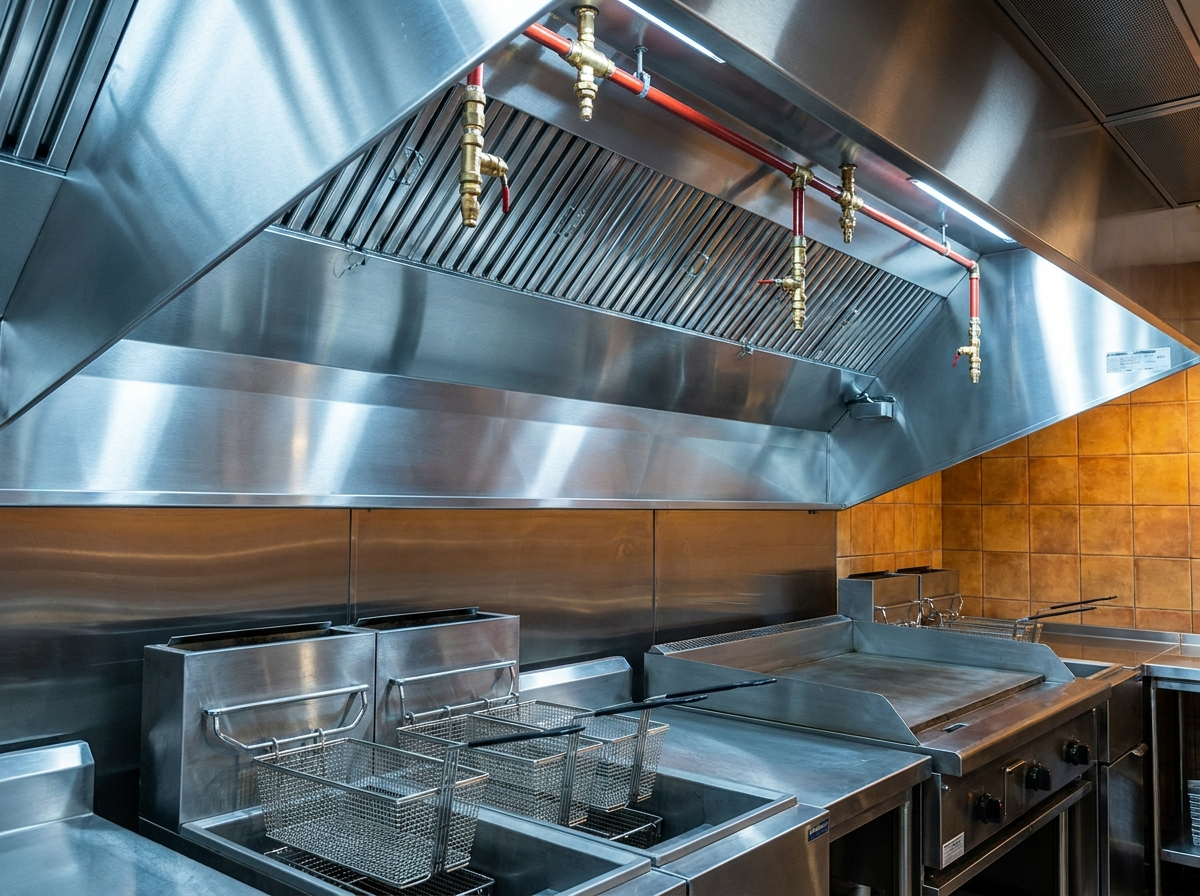
Fire-suppression nozzle placement is driven by the appliance line-up underneath the hood. Change a fryer to a griddle after the permit set is submitted and you are not editing a plan — you are re-drawing, re-submitting, and waiting for a second review on a calendar you do not control.
Model numbers, dimensions and BTU loads pinned before the hood is sized. This one decision protects the whole schedule.
Type I hood, exhaust and make-up air balanced to the line-up. Coordinated with an independent mechanical contractor holding the applicable Texas license.
Nozzles placed to the final appliances, on a hood-suppression permit the fire marshal reviews separately from the building set. Coordinated with a fire extinguisher contractor licensed by the Texas State Fire Marshal's Office.
Grease interceptor sizing follows the plumbing code, and the local wastewater authority sets the minimum and approves it. Undersizing is a rip-out, not a revision — which is why it is scoped in phase 01, not discovered in phase 04.
05 Why us and not a general contractor
S&T owns and operates food businesses. That is how the company is structured, not a line in a proposal — and it is the reason our schedules assume an inspection will go sideways instead of assuming it won't.
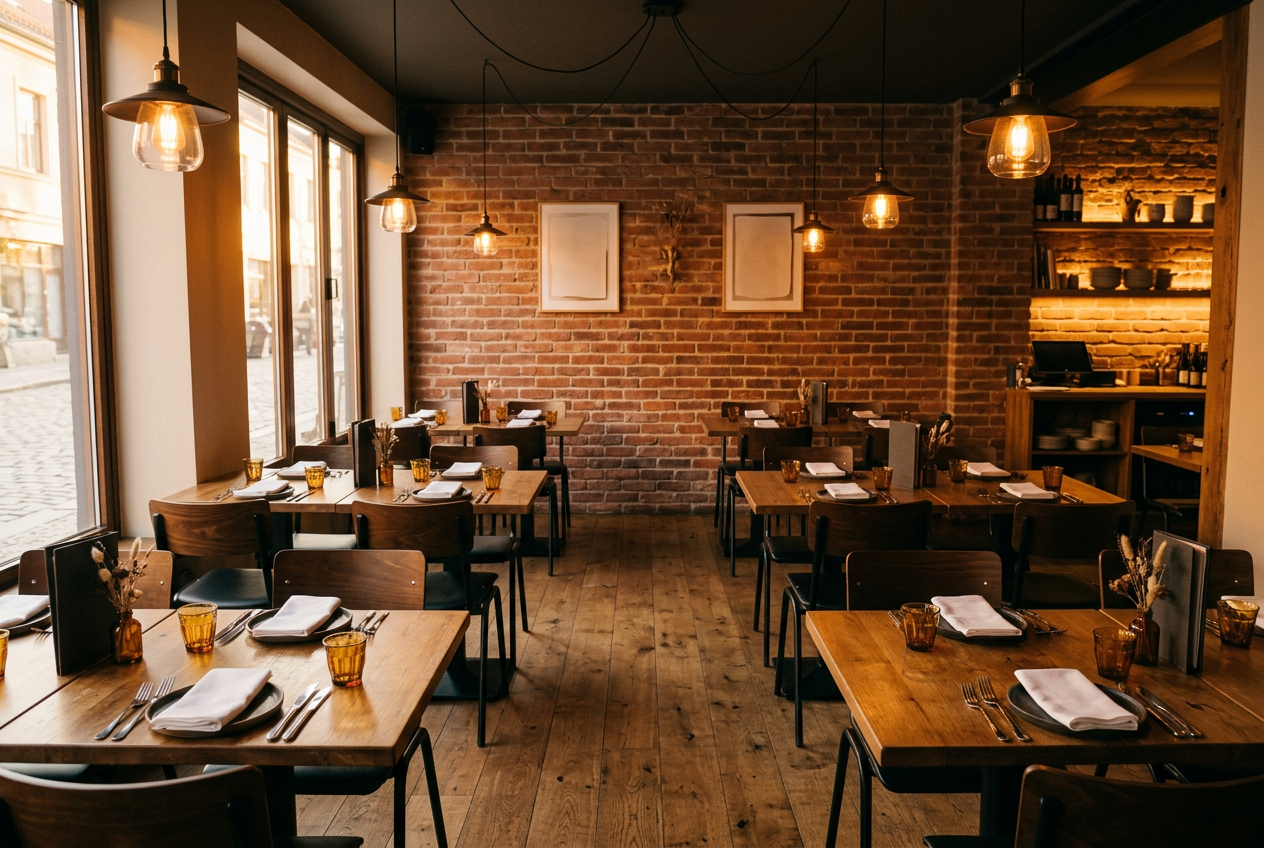

Full operating engagement under a management agreement — menus, recipes, systems, catering and vendor relationships. S&T runs it.
Owned by S&T. Food trailer and catering — and the test bed for the point-of-sale, payroll and back-office stack our affiliated software company is building to replace Square.
The catering arm. Full-service catering and events, and the vendor bench that comes with running them.
Disclosure: these are businesses S&T owns or operates. They are shown as evidence of what we do, not as independent customer endorsements. Project references furnished during proposal.
06 After the doors open
Most contractors hand you a key and disappear. The month after opening is when an operator actually finds out whether the business works — and it is the month nobody planned for.
S&T sits in a family of affiliated companies covering what a restaurant needs after the CO is issued: point-of-sale and kitchen display builds, payment gateway and merchant-account setup, the website and ordering, bookkeeping, reporting and payroll support. Optional, priced separately, and available because we needed them for our own food business first.
You are hiring S&T for the build-out. This is just what is available on the other side of it.
07 Franchisees
A franchise build-out has a constraint an independent doesn't: the prototype is fixed, the equipment package is specified, and the opening date is already written into a development agreement with a penalty attached.
That is a scheduling problem more than a design problem. What it needs is a party who reads the franchisor's spec set, converts it to a permit set the local jurisdiction will actually approve, and manages the difference between the two without renegotiating the brand standard every time a plans examiner has a comment.
08 Questions we get before anyone signs anything
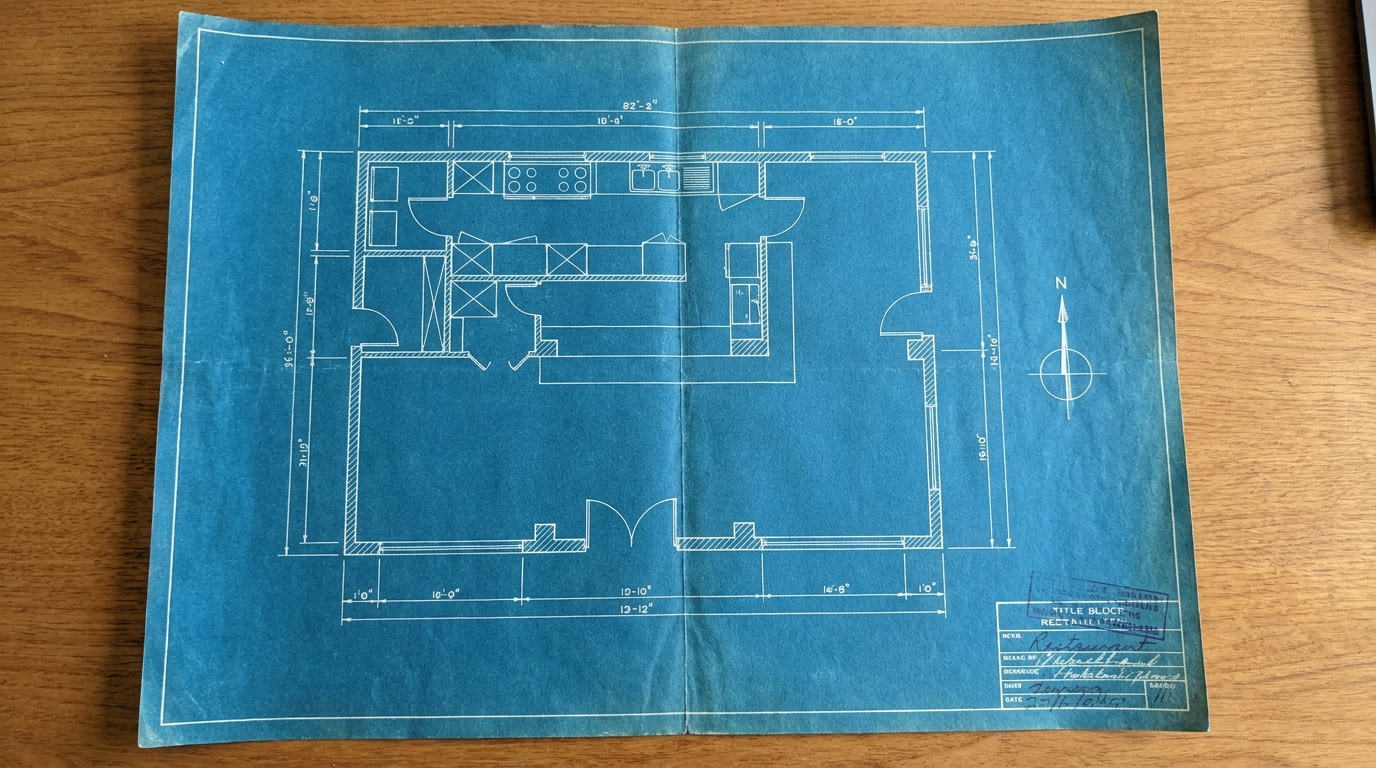
It depends far more on the condition of the space and the review calendar than on the construction itself. A second-generation restaurant where the existing hood, grease and electrical service match your equipment list moves fastest. A raw shell is slowest. The variable nobody controls is the plan-review comment cycle — how quickly comments come back, and how quickly they are answered. Give us the address and the equipment list and we will give you a real sequence instead of a range.
They are separate tracks. Health plan review typically runs in parallel with building plan review, and the health inspection usually happens after equipment is set and utilities are live. The food establishment permit is issued after that inspection passes — and it is a separate thing from the inspection. In an incorporated city both have to land: a passed health inspection does not substitute for the CO, and the CO does not substitute for the food establishment permit. In unincorporated county locations the building side may work differently or not exist at all, which is one of the first things we confirm at the address.
Sometimes, and it is worth checking before you sign the lease rather than after. The hood has to suit your appliance line-up, not the last tenant's — exhaust volume, make-up air and suppression nozzle placement all follow the equipment underneath. A hood that was correct for a pizza oven may not be correct for a fryer bank. This is the single most valuable thing to verify during feasibility.
Those scopes are performed by independently licensed trade contractors and carried on our permit and inspection schedule. S&T produces the drawings and permit set for build-outs that fall inside the Texas exemption for smaller commercial spaces, runs the permitting and the project management, and brings in a registered architect where the size of the space or the extent of the exitway work requires one. Sealed structural, MEP and fire-protection documents come from licensed Texas professional engineers we retain. We manage and deliver the construction and are the single party accountable for the date. That distinction matters, and we would rather state it plainly than let you find out at rough-in.
The address, the lease or LOI, your equipment list with model numbers, and your target opening date. If you have the landlord's existing drawings or a franchisor prototype package, send those too. That is enough to tell you what stands between where you are and open.
No. Engage us for the permit package alone, the build alone, or the whole path on one contract.
09 Start
We will tell you what stands between the two — before you owe us anything.
Bring these
Address and lease or LOI
Equipment list with model numbers
Target open date
Existing drawings or franchisor prototype
Where we work
Weatherford · DFW · Waco · Houston
— and everywhere in between