Home / Warehouse & racking / High-piled storage
01 HPS permit packages · Weatherford · DFW · Waco · Houston
High-piled storage plan review is where warehouse projects stall — not because the racking is wrong, but because the submittal is incomplete. We assemble the package, submit it, and answer the fire marshal's comments.
→ The short version
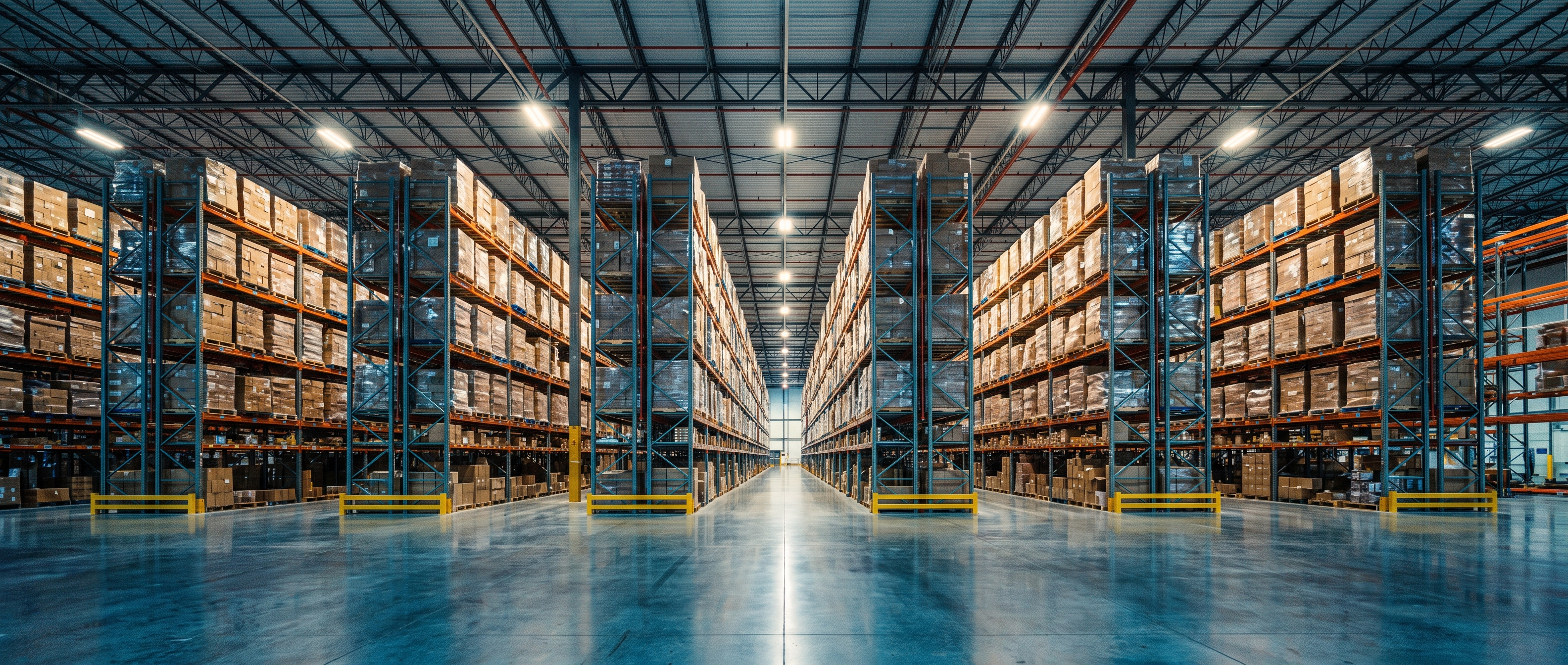
You need a high-piled storage permit when more than 500 square feet of your building is used for high-piled combustible storage. Under IFC Chapter 32, storage counts as high-piled when the top of storage exceeds 12 feet — or 6 feet for high-hazard commodities, which includes Group A plastics, rubber tires and Level 3 aerosols. The permit is driven by what you store, not by the rack you store it on: commodity classification sets your sprinkler design, your flue spaces and your aisle widths, and getting the classification wrong is what sends a package back. S&T assembles the submittal, files it, and answers the fire code official's comments. Weatherford, DFW, Waco and Houston.
02 Work out where you stand
Sprinkler density, flue space, aisle width, maximum height — all of it is derived from the commodity class. This is the first thing a plans examiner checks and the most common thing to get wrong. Three questions:
—
—
This is a directional guide, not a code determination. Classification follows IFC Section 3203, and the edition your jurisdiction has adopted — plus any local amendments — is what actually governs. Mixed commodities, encapsulation, banding and open-top containers all move the answer. We confirm the adopted edition before we classify anything.
03 The submittal
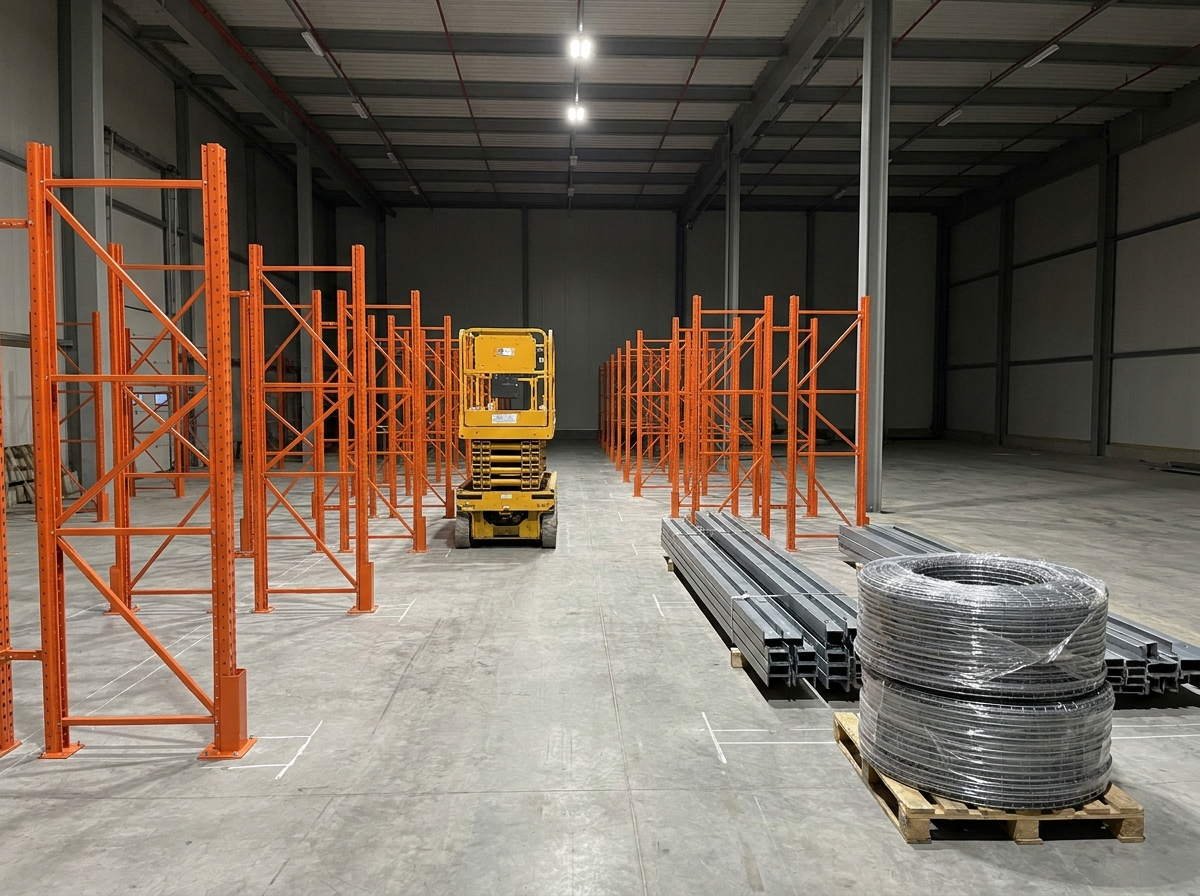
Most rejected packages are not wrong — they are short. Below is what a Texas fire code official is generally looking for. It is a long list, and every missing line is another comment cycle.
04 Flue space
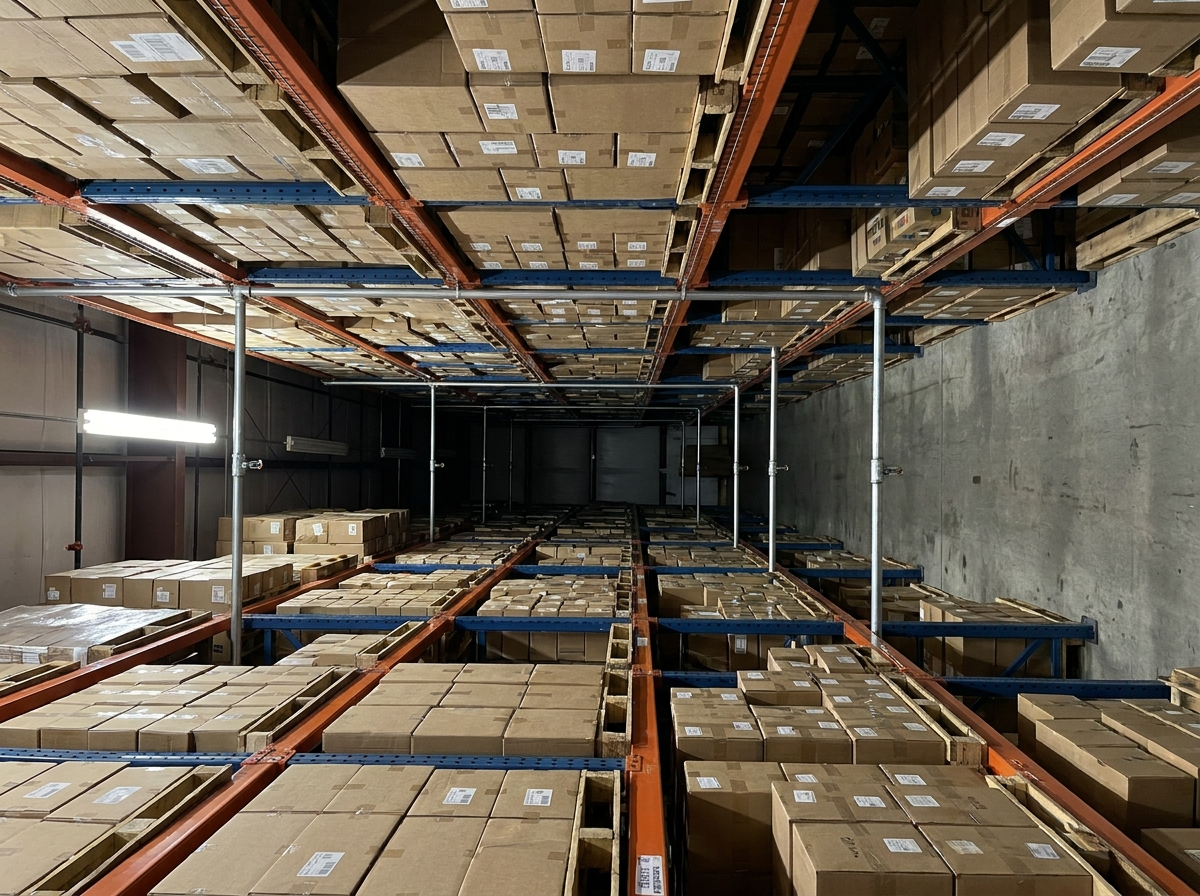
Measured load to loadRack frame shown faint
This single sentence accounts for more failed inspections than anything else on this page. Flue space is the gap that lets sprinkler water reach down through the rack, and it is measured load-to-load — so a correctly built rack with pallets overhanging the beam has no flue space at all.
| Configuration | Transverse | Longitudinal |
|---|---|---|
| Single-row rack, sprinklered, ≤ 25 ft | 3 in. | — |
| Double-row rack, sprinklered, ≤ 25 ft | 6 in. | 6 in. |
| Double-row rack, sprinklered, > 25 ft | 3 in. | 6 in. |
| Multi-row rack | 6 in. | — |
Per IFC Table 3208.3. Your adopted code edition and local amendments govern — we verify against the jurisdiction, not against a table on a website. Perimeter aisle requirements and the 44-inch aisle calculation are confirmed the same way.
05 Who seals what
People assume everything in a warehouse package needs a stamp. That is not how it works, and knowing the difference saves real money.
The HPS plan of storage — commodity classification, flue spaces, aisle widths, sprinkler basis, smoke removal — is a fire code submittal. Many Texas jurisdictions accept it without a professional engineer's seal, and recommend rather than require a design professional. We prepare and file it.
Rack structural documents — capacity, base plates, anchorage into the slab, seismic — are a different animal. Where a stamp is required, those calculations are sealed by a licensed Texas professional engineer we retain, and the sealed set comes back to you with the package.
Which of the two your jurisdiction wants, and in what form, is the first question we answer — before anyone orders steel.
06 Questions we get before anyone signs anything
If more than 500 square feet of the building is used for high-piled combustible storage, yes. Storage is "high-piled" when the top of storage exceeds 12 feet — or exceeds 6 feet for high-hazard commodities such as Group A plastics, rubber tires and Level 3 aerosols. The 500 square feet is measured as the high-piled area including its aisles, not the whole building, and separate arrays closer than 15 feet apart are generally counted as one area.
You can, and people do, and it is the most expensive way to run the job. Commodity class drives flue spacing, aisle width, sprinkler density and maximum height — all of which are decided by rack layout. If the layout is already bolted to the slab when plan review comes back with comments, the fix is a teardown, not a revision. Permit first, then order steel.
Not necessarily, and this is the most common unpleasant surprise in a warehouse deal. Sprinkler design density is derived from commodity class and storage height. A building sprinklered for Class III at 20 feet is not sprinklered for high-hazard at 25 feet. Changing what you store — or how high you stack it — can require a sprinkler system upgrade even though nothing about the building changed. Confirm this before the lease, not after.
It depends on the jurisdiction and on which document you mean. Many Texas jurisdictions accept the high-piled storage plan of storage without a PE seal and recommend rather than require a design professional. Rack structural calculations — capacity, anchorage, seismic — are more often required to be sealed, and where they are, a licensed Texas professional engineer we retain seals them. We confirm the requirement with the specific authority having jurisdiction before we scope the work.
Between the loads, not between the rack frames. That distinction is the single most common inspection failure in high-piled storage. A rack built exactly to the drawing will still fail if the pallets overhang and close the gap, which is why pallet stops and commodity stops appear on the submittal and why the storage plan matters as much as the rack plan.
The address, the building's sprinkler information if you have it, a description of what you intend to store — including packaging — and your target storage height. That is enough to tell you your commodity class, whether you are over the threshold, and what the package will require.
07 Start
We'll tell you whether you're over the threshold and what the package takes — before you owe us anything.
Bring these
Address and lease or LOI
What you store — product and packaging
Target storage height and rack type
Sprinkler info for the existing building
Where we work
Weatherford · DFW · Waco · Houston
— and everywhere in between